
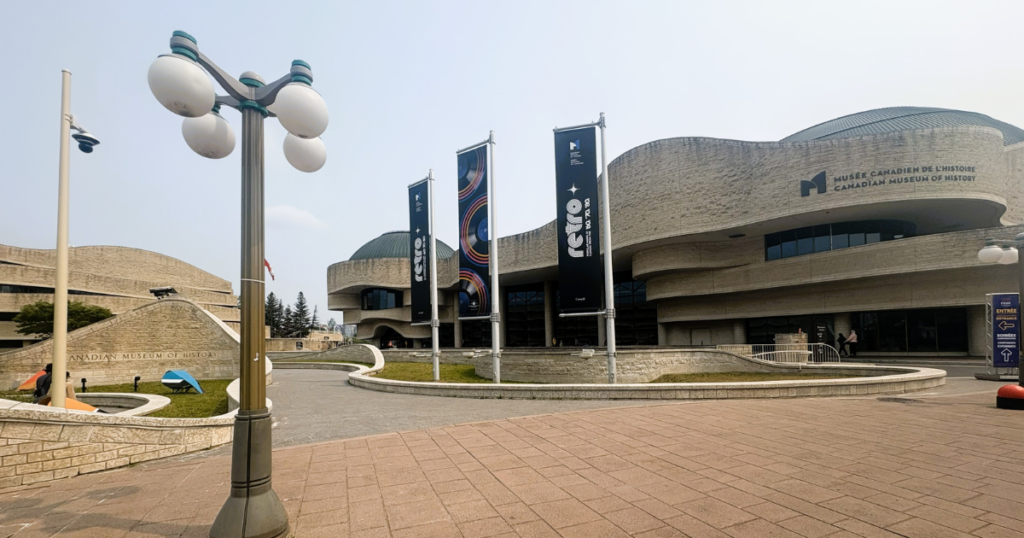

Canadian Museum of History Review: Autism Edition
The Canadian Children’s Museum, located inside the Canadian Museum of History, looks appealing for kids. But it just didn’t make the cut for my personal list of autism-friendly attractions in Ottawa.
The Canadian Museum of History was the last stop on our day in Ottawa during our East Coast Canada road trip. This wasn’t my kids first visit to this children’s museum; we had visited it on our last trip to Ottawa too. But they were only 7 and 9 then, so neither remembered it. Compared to other children’s museums we’ve visited, this one isn’t really that memorable.
While my kids are a bit old for a children’s museum this time, they had a great time at the London Children’s Museum, so I thought the Children’s Museum here would be the highlight of our day. Unfortunately, it wasn’t Brie’s favorite Ottawa attraction. (Calypso Waterpark was by far her favorite attraction read our full review!)
After spending the morning at the Canadian Museum of Nature (read our review here), I really hoped the Children’s Museum would offer more for Brie. Sadly, it was simply too busy for her to enjoy anything there. I wish they offered sensory-friendly times; that would have been a game-changer. If you’re looking for places that do offer those in Ottawa, check out this guide.
In this Canadian Museum of History review, we’re sharing our ratings on the noise level, safety, sensory activities, and more. You’ll quickly see why my family and I weren’t fans, especially during peak season!
Where to Stay in Ottawa (and surrounding area)
Here are the best hotels in Ottawa and the surrounding area for families:
- Chateau Cartier Hotel & Resort ($) (read our review on how autism friendly it is): 15-minute drive to Parliament Hill, on-site coffee shop and restaurant, in-room refrigerator, on-site Nordic thermal spa.
- Holiday Inn Express & Suites Ottawa West ($): 20-minute drive to Parliament Hill, indoor pool, free breakfast, in-room refrigerator.
- DoubleTree by Hilton Ottawa Downtown ($$): 10-minute walk to Parliament Hill, indoor pool, soundproofed rooms, on-site restaurant.
- Brookstreet ($$$): 23-minute drive to Parliament Hill, soundproofed rooms, indoor pool with an adjacent children’s wading pool, outdoor “Jazz Garden” and games.
- Ottawa Marriott Hotel ($$$): 9-minute walk to Parliament Hill, indoor pool, in-room refrigerator.
- The Metcalfe Hotel ($$$): 8-minute walk to Parliament Hill, indoor game room.
- Fairmont Chateau Laurier ($$$$): 5-minute walk to Parliament Hill, indoor pool.
- Hilton Lac-Leamy ($$$$): 6-minute drive to Parliament Hill, indoor pool, children’s pool, arcade/game room, in-room babysitting for a fee.
My Canadian Museum of History Review Autism-Friendly Rating
Overall Rating: 3/10 (Children’s Museum)
If you visit during peak tourist season, the Children’s Museum is just not a good experience for a child with autism. It’s far too crowded to genuinely enjoy anything. Most of the museum is in one large room with small, defined play areas, so the crowd and noise quickly become overwhelming. Honestly, it was too much even for me. I was ready to leave as soon as Brie was, just to find somewhere quieter and less chaotic.
Other Exhibits
The rest of the Canadian Museum of History is better when it comes to crowds and noise. That said, the permanent exhibits don’t offer much for younger children. They lack play areas and generally don’t interest the younger crowd. Older kids and teens interested in Indigenous history will find it very appealing, but for others, it’s a pretty quick walk-through.
The one exception was the special exhibit, Retro – Popular Music in Canada From the ’60s, ’70s, and ’80s. This exhibit had a great Retro Lounge, which was in a separate room. It wasn’t busy at all, so the noise level and crowd were manageable for an autistic child. However, this special exhibit is only on until January 18th, 2026. (I would rate this specific exhibit a 7/10 if you get a chance to visit before it closes!)
My ratings mostly focus on the Children’s Museum section because the other permanent exhibits offer so little appeal for most children with autism. While a quick stroll through the permanent exhibits is an alright idea for a break, most families won’t spend much time there.
Tickets
Rating: 8/10
You can buy tickets online to save time waiting in line, or you can purchase them at the door.
The Canadian Museum of History accepts the Access 2 Card, with free admission for one support person accompanying a visitor with a disability. To purchase tickets in advance that include a support person, you have to do so by phone at 819-776-7000. Otherwise, you can get them at the ticket counter the day of your visit.
We didn’t get our tickets in advance, but there was no line-up when we arrived, so the process was quick and easy. Since the kids got in free with the Canada Strong discount and I was Brie’s support person, we didn’t pay anything for admission!
Safety For Children with Autism
Rating: 2/10
The biggest downfall of the Children’s Museum regarding safety is how crowded it gets. Maybe the off-season is better, but with the large crowd there when we went, keeping track of your child isn’t easy.
The Children’s Museum occupies one big, open space. Each exhibit is either in a small building inside the main room or in small rooms leading off it. Since they have about 20 separate exhibit areas, a child who gets lost or wanders off wouldn’t be quick to find. You’ll want to stay one step behind your child if they’re a runner or wanderer.
One positive thing is that a staff member is stationed at the entrance to the Children’s Museum section, so they might notice a child wandering off and stop them from leaving the area.
Staff
Rating: 8/10
The staff members inside the Children’s Museum all wore distinctive beige-colored uniforms. This makes them easy for a lost child to recognize as staff and ask for help.
Every staff member we interacted with was friendly and approachable. They also seemed very attentive, actively walking around to monitor the children and tidy up messes.
Noise Level
Rating: 0/10
Because of the open-concept design and the large crowd, the museum was far too loud. Brie quickly gave it a thumbs down. While the noise didn’t bother her enough to ask for her headphones, she did wear her Loop Earplugs and rushed through the exhibits to exit quickly.
Sensory Friendly Times
Rating: 0/10
The Canadian Museum of History does not offer any sensory-friendly hours. Given the crowd that was there when we visited, this really makes the museum inaccessible for many children with autism. Hopefully, the museum will get with the times and join the many other kids’ attractions that offer special sensory-friendly times with fewer crowds and noise soon. (With them only being open until 5 p.m. most days, they could easily offer a quiet hour once or twice a month.)
Sensory Friendly Activities
Rating: 3/10
The museum offers many play areas. Each area focuses on a different country or industry, like a cargo ship, a clothing company, a café, and a theater. However, the museum offers very few sensory activities. They had some areas for building with blocks, but the main focus is on educating children through pretend play.
Because of the crowds and noise level, it’s simply not a sensory-friendly environment. I also could not find any information on sensory kits available to borrow for kids who get overwhelmed, so you will want to pack your own (see what’s in Brie’s here).
They do, at least, have noise-defending headphones you can borrow if you forget your own. You can book them in advance here:
Other Spaces in
Quiet Spaces
Rating: 4/10
The museum does not have any dedicated quiet or sensory rooms. This is another feature that children’s places are starting to provide that the Canadian Museum of History really needs to get on board with.
You are unlikely to find anywhere quiet to take a break inside the Children’s Museum. However, you can find quieter areas in the rest of the Canadian Museum of History. The First Peoples Hall, located a floor below the Children’s Museum, is fairly quiet. The Panorama Café was almost empty when we stopped in, so it made a great spot for us to take a break. If your child truly needs a break away from everything, there is a nursing room on the lower level.
Eating Area
Rating: 8/10
Inside the Children’s Museum, you’ll find a “Snack Zone,” a small room where you can bring your own food to eat. But, with the noise and crowds, it’s not a great place for a snack break for an autistic child. Luckily, there are better options outside the Canadian Children’s Museum, in the main Canadian Museum of History.
A Second Cup is located near the museum entrance for any parents who just need to grab a cup of coffee. There’s also a cafeteria on the lower level of the museum that serves child-friendly foods like burgers, fries, hot dogs, and chicken fingers. You’re also allowed to bring your own food to eat there, which earns bonus points from me, since that’s a must if you have a child with restricted eating or allergies.
Brie’s Experience at the Canadian Museum of History
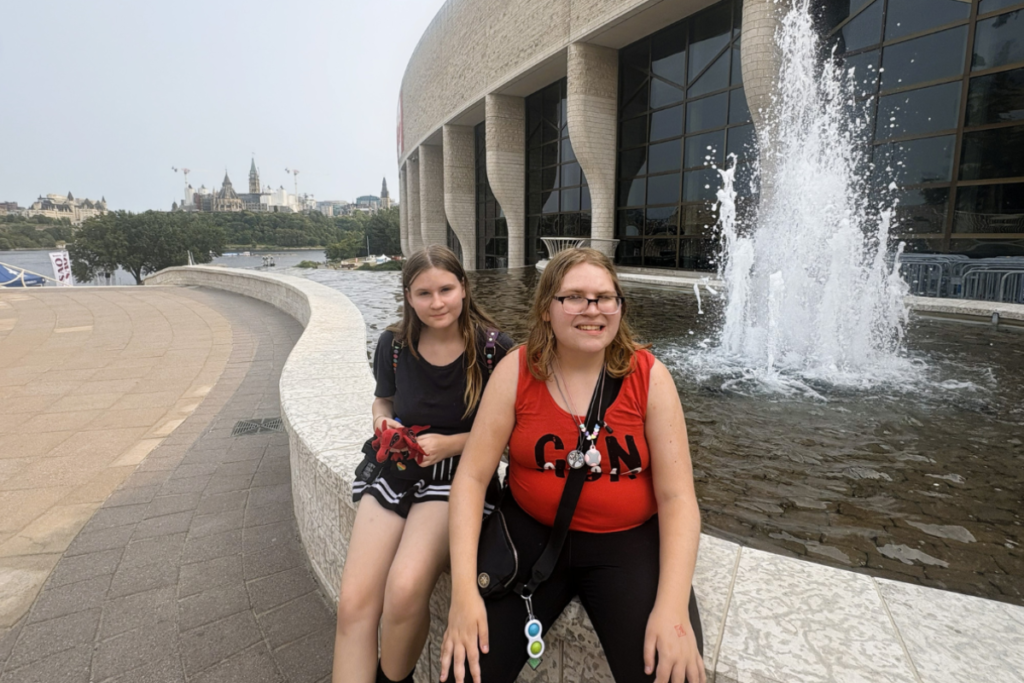
We started at the Children’s Museum, and it was complete chaos—way too crowded and loud.
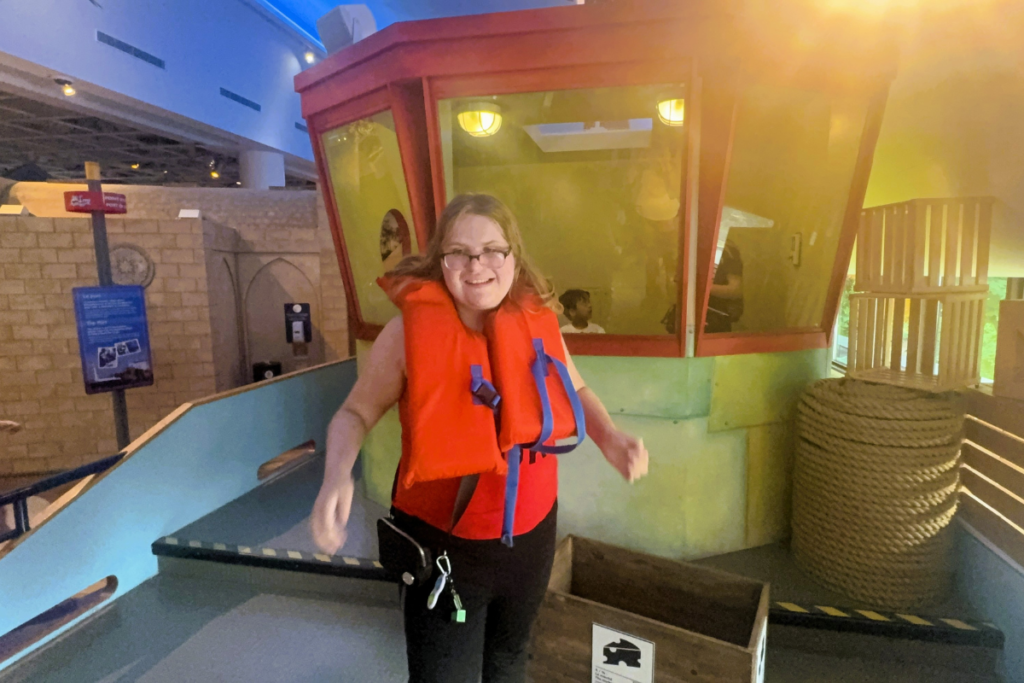
Brie led the way, walking through each exhibit to check it out quickly, but she didn’t stop to play anywhere, except for trying on a life jacket in the boat exhibit. Once she felt she’d seen it all, she quickly walked us to the exit and confirmed she was done.
Next, we went to the Retro exhibit. Brie enjoyed this one much more. She stopped right inside the doorway when she noticed the disco ball, announced, “It’s a dance party!” and started dancing. It was much quieter in there, giving her a chance to unwind from the overstimulation of the Children’s Museum. She walked a bit slower, taking more time to check everything out.
Once she finished the exhibit, we walked out and noticed the sign for the Retro Lounge. This area was more designed for kids than the main exhibit room. First, they had a craft area set up with several tables. Beyond that was a large space with an interactive LEGO projection floor, photo-op backgrounds on the wall, and a couch and chairs in the corner where we took a break. They also had a projector wall you could dance in front of, a giant Connect Four game, a Light Bright wall, and bean bags scattered on the floor. We had a nice, long break on the couch—it was the perfect spot for her to decompress.
When Brie was ready to move on, we headed downstairs to check out the permanent exhibits. Brie wasn’t too interested in any of it, but she did walk around to look at everything. Zen, however, was very interested in the exhibits, so Brie and I would find a bench to sit on while we waited for her.
We took another break in the Café, which was quiet enough for Brie to tell me clearly that she was done and ready to go back to the hotel.
Final Thought on Visiting the Canadian Museum of History with Autism
While the Canadian Children’s Museum was a miss for us, I’m curious if we just went at an unusually busy time. I’m hoping we can plan our next Ottawa trip during the off-season so we can check it out again to see if it’s always as busy as it was this time.
If you’ve visited the Canadian Museum of History Children’s Museum and had a better experience, we’d love to hear about it! Head over to our new Autism on Vacation Facebook group to share your Canadian Museum of History Review to let me know if it was busy when you visited. Feel free to share any other travel experiences and tips you have too.
And don’t forget to follow us on Facebook and TikTok to see more of our “Is it Autism Friendly” reviews from our East Coast Canada trip and other posts on autism friendly events, attractions, and hotels.
More Autism Travel Planning Resources
Ottawa
- Sensory Friendly Activities Ottawa: A Complete Guide
- Is Calypso Waterpark Ottawa Autism Friendly?
- Is the Museum of Nature in Ottawa Autism Friendly?
- Is the Château Cartier Hotel Autism Friendly?
- Things To Do in Ottawa with Kids
- Kōena Spa Review + Tips
- Château Cartier Hotel Review
Travel Tips
- Autism Travel Tips: A Parent’s Guide for Traveling with Autism
- Tips for Traveling with Autism: Road Trips
- Finding Autism Friendly Hotels
- Travel Sensory Kit for Autism
Ontario Destinations
- Niagara Falls Travel Guides and Reviews
- Ottawa Travel Guides and Reviews
- Toronto Travel Guides and Reviews
- London Travel Guides and Reviews