
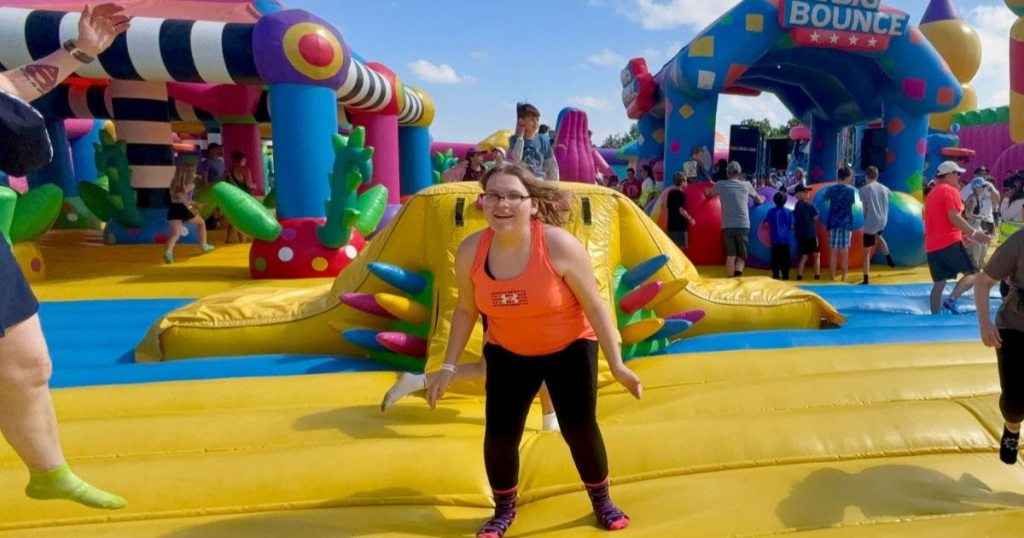

Is the Big Bounce autism friendly?
As part of my goal to build a list of autism friendly Ontario travel options, I took my 17-year-old autistic daughter, Brie, to two Big Bounce Canada events in June 2025 to see how sensory friendly the experience really was. Here’s what we found—and what you’ll want to know before you go.
Our first experience, in London, Ontario, was a flop. The weather was unbearable, and 3 of the 7 advertised inflatables were missing. To make up for it, the organizers offered free tickets to the following weekend’s event in Hamilton, Ontario, which turned out to be a much better experience for us.
If you want all the general details about Big Bounce Canada, including what to expect, my review of both events, tips for attending, and why the VIP upgrade isn’t worth it, check out my full Big Bounce Canada review on my sister site Mama’s on Vacation and my full video tour on YouTube.
You can also check out our Autism Travel Guide and DIY Sensory Travel Kit for more tips on navigating events with autistic kids or teens. Or ready through our other posts on autism friendly events, attractions and hotels we’ve rated so far. And don’t forget to check out our Disney World guides if you’re ready to start planning your big trip.
Below, I’ll break down whether I think Big Bounce is an autism friendly event, where they do good and where they can improve, and what I’d recommend if you’re bringing an autistic child, teen or adult.
Planning to stay the night?
Here are my top 3 recommendations for kid-friendly hotels in London, Ontario:
- Delta Hotels London Armouries – A pet-friendly “castle” hotel with a heated indoor pool and two restaurants.
- Hard Rock Hotel –A pet-friendly hotel with an indoor/outdoor pool and onsite restaurants, located near the Children’s Museum and The Factory.
- Best Western Plus Lamplighter Inn – Our favorite, with a tropical pool area that includes a waterfall, hot tub, and waterslide.
My Big Bounce Canada Autism-Friendly Rating
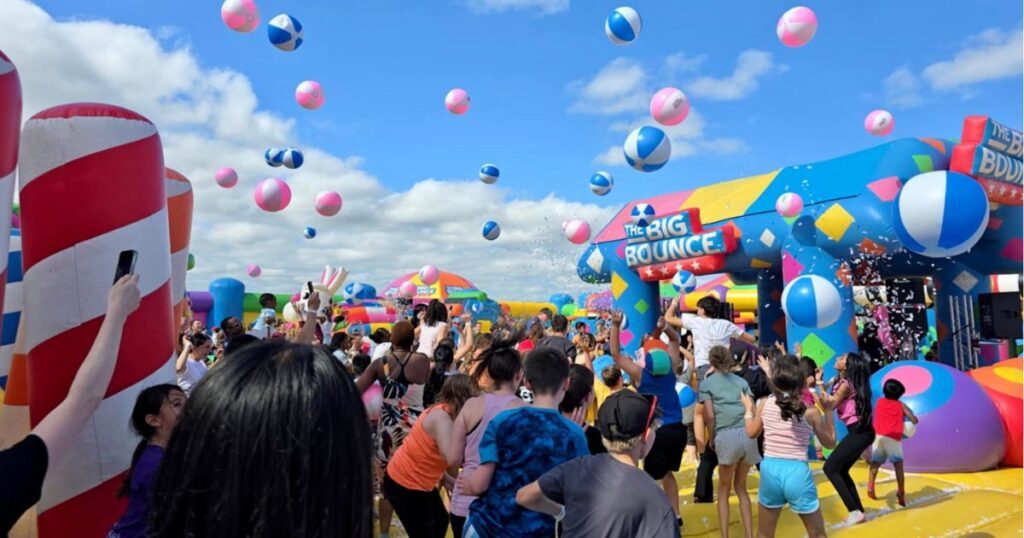
Overall rating: 6/10
In terms of making an effort to accommodate children with autism and sensory needs, Big Bounce Canada didn’t offer much. There are no designated quiet areas, no sensory-friendly time slots listed on their website, and the event is very busy and loud. While many autistic children and teens might enjoy the activities, the crowds could be overwhelming or difficult to manage for some.
Big Bounce Canada Tickets
Rating: 2/10
Tickets can be purchased online, which is recommended since the event often sells out. While there may be tickets available at the door, it’s safer to buy in advance (especially when going with an autistic child who doesn’t handle change well).
There was no information available online about support worker entrance fees. The only detail provided is that parents can attend for free, but must purchase a ticket if they want to enter any of the inflatables with their child.
Safety For Children with Autism
Rating: 3/10
The event locations vary by city, but the two we attended were in more rural settings—London was held on the grounds of a race track, and Hamilton took place on a farm that hosts a corn maze in the fall. Both sites were spread out over large areas, which helps with crowd control and makes supervising a child who might run or bolt a bit easier.
Still, I wouldn’t have taken a younger Brie and Zen to the event alone; another adult would be necessary. Most inflatables have multiple entrances and exits, so sending a flight-risk child inside unsupervised isn’t safe. It’s very much a “stay close” environment that requires one-on-one supervision for young children or those who are flight risks.
They do have a lost child protocol in place: if you lose sight of your child, you can notify staff, who will issue a lost child alert via radio. However, I highly recommend using an AirTag, Tile, or SmartTag so you can quickly locate your child yourself. Brie doesn’t wander as much as she used to, but she still wears an AirTag anytime we attend busy events or attraction like this, for my own peace of mind.
Staff
Rating: 2/10
The event was well-staffed, but most staff didn’t appear to pay much attention to the children. The staff are hired locally for these events, but it seemed like little care was taken in choosing people who are experienced or interested in working with kids.
At the London event, the only staff member who seemed truly engaged was the DJ. The rest were physically present but mentally checked out.
Inside the inflatables, some staff were assigned to monitor attractions, but their supervision was minimal. For example, the staff member near the ball pit wasn’t positioned to be able to see inside to ensure safety, and the person at the bottom of the slide sat in a corner, rarely watching the kids or enforcing rules. Their roles felt pointless—if they weren’t supervising the children, why were they there?
It was extremely hot, and this wasn’t the first session of the day, so staff were likely fatigued. Still, as someone who works in childcare, I got the clear impression they lacked experience and genuine interest in caring for children, which is essential for these roles.
The Hamilton event showed slight improvement. Staff better monitored the slide, and the ball pit attendant stopped kids from climbing over the walls. However, supervision inside the Air Space ball pits was still lacking, and the children were quite wild.
Despite the marginally better supervision, staff were not as friendly or attentive as you would expect at a children’s event. For a lost child seeking help, these adults would not seem approachable, which is concerning at an event like this.
Noise Level
Rating: 6/10
Being outdoors helps reduce noise from such a large crowd, but there are still many sounds that may overwhelm some children with sensory sensitivities.
Brie gave the noise level a thumbs down, but tolerated it well without asking for her headphones.
The most noticeable noise comes from the constant air blowers inflating all the structures. While most people can easily tune this out, children with autism or sensory issues may find it too much. When Brie was younger, she couldn’t tolerate that sound at all and wouldn’t go near bouncy castles because of it (we had a small one at home, but got rid of it since she wouldn’t use it). She has improved a lot and now can ignore the blower noise to enjoy the activities.
There is also a lot of music playing, which may be helpful for some kids but could add to the sensory overload for others. For Brie, the music actually helped—she often uses music to block out other sounds (she’s always asking me to turn up the music in the car). That might be why she liked The World’s Biggest Bouncy Castle the most, since it had a DJ right inside.
Considering all this, noise level is a mixed factor, but one that families with sensory-sensitive kids should prepare for when visiting Big Bounce Canada.
Sensory Friendly Times
Rating: 0/10
There is no information available online about sensory-friendly times or dedicated sessions at Big Bounce Canada. This makes it difficult for families looking for a quieter, less overwhelming experience.
Sensory-Friendly Activities
Rating: 8/10
The activity itself is autism- friendly. For many children with autism, jumping is soothing and helps with regulation. I’ve seen many mini trampolines in school sensory rooms for this reason. For most autistic children, these giant bouncy castles are appealing. Brie has always been one to jump when she’s excited, so I knew this would be something she’d really enjoy.
If you’re child has difficulty with body awareness, they are likely going to bump into people in the inflatables. The nice thing is that they do separate it by age groups, so I didn’t have to worry about Brie bumping into too many little kids. But for kids who are the youngest in their age grouping, it could make it harder for them being surrounded by so many bigger kids.
There is a lot of sensory input for kids who are sensory sensitive, though. While any kids’ event is going to be a bit loud, this one also has the sounds of the giant air blowers everywhere. Add to that, there is a lot of visual stimulation. The castles are bright and colorful, so it’s a lot to take in.
Other Spaces/amenities
Quiet space
Rating: 0/10
There are no quiet areas for kids who need a break from the noise and stimulation. While the VIP lounges were tucked off to the side, somewhat away from the main activity zones, they did not offer any real escape from the sounds. For some children, this could quickly become overwhelming, so be prepared to leave early if your child needs to step away.
Eating Area
Rating: 9/10
Food options vary by location since all food is provided by local food trucks, which are not listed on the event website in advance. This means you won’t know what will be available ahead of time to plan your meals. However, outside food is allowed! This is a huge advantage for families with children who have sensory-related food issues, allergies, or food intolerances.
Washrooms
Rating: 3/10
Both events had porta-potties grouped in one area. There were at least two larger, accessible units for caregivers who need to assist children.
Brie’s Experience
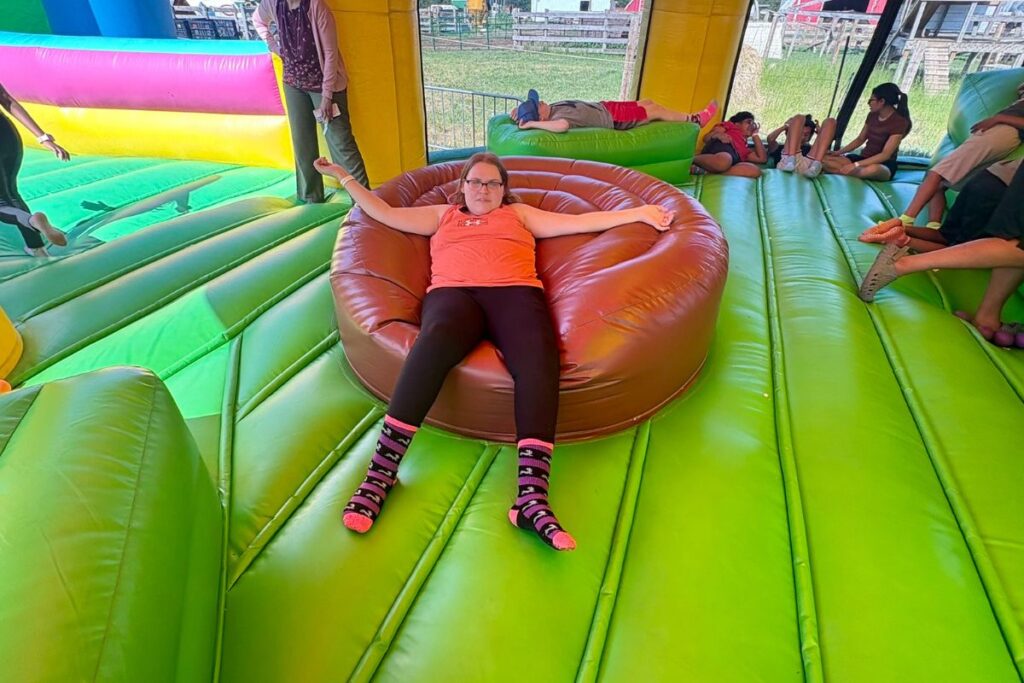
Our biggest challenge at the London event was the unbearable heat. For Brie, this only added to an already overstimulating environment.
We started in The World’s Biggest Bouncy Castle, which Brie seemed to tolerate best. She loved the music playing inside and happily stayed near the DJ, bouncing and dancing to the beat. But the heat quickly wore her down, and she needed to rest in the shade. While there weren’t any official “break areas” inside, there were plenty of shaded spots where she could sit and recover.
Because of the heat, we took frequent breaks and spent more time resting in the shade than playing.
Brie showed little interest in the other three inflatables after our time in The World’s Biggest Bouncy Castle. She briefly checked each one out, but only lasted a few minutes because the inflatables were burning our feet. She found shady spots to sit instead.
Still, she didn’t want to leave.
We managed to get back into The World’s Biggest Bouncy Castle for another 15 minutes before she agreed to go home.
When asked what she enjoyed, Brie said she liked the big slide the most, although she only went on it twice. When asked what she didn’t like, she said that it hurt her feet and the crowd. Right after we got home, she said she didn’t want to go to Big Bounce Canada again when asked.
However, after receiving a free ticket offer for the Hamilton event, I asked her again. Surprisingly, this time she said yes.
We accepted the offer to attend the Hamilton event to see if our experience would improve with all the inflatables present and cooler weather.
At the Hamilton event, Brie was excited to see the Giant inflatable fully inflated and wanted to try it first. She took her time going through it—it took her nine minutes to complete. When given the choice between climbing or crawling through a tunnel, she chose the tunnel.
After one round, she wasn’t interested in doing it again. She also showed no interest in the three new inflatables or the two that had been at London. Instead, she preferred to sit in the shaded chairs until it was time for The World’s Biggest Bouncy Castle.
When we got in, she had a blast. Without the heat, she enjoyed it far more than she did in London. We stayed for the full 45-minute time slot. Although it was more crowded, she loved dancing to the music with everyone in front of the DJ. With the cooler weather, she was able to fully enjoy the party atmosphere and happily danced the whole time.
Final Thoughts on Big Bounce Canada
Overall, our second experience assessing whether Big Bounce Canada is autism friendly was a success. I’m glad we gave them another chance after the flop in London. While it may not be the best activity for all children with autism, I believe many would enjoy it.
Supervision was typical for an activity like this, so families need to ensure they have enough adults for one-on-one supervision for any children prone to wandering or running off. Aside from being a sensory-friendly activity, the event unfortunately did not offer much to make it more accommodating for children who struggle with crowds and noise.
The price is a bit high, but for three hours of energy-draining fun, it’s worth the cost, provided the weather isn’t too hot and all the inflatables are working.
Big Bounce Canada makes my list of autism friendly activities in Ontario.
For my full thoughts on Big Bounce Canada and a detailed review of both events, see my Big Bounce Canada Review.
If you’re looking for more sensory-friendly activities or autism friendly travel ideas, check out the autism friendly events, attractions and hotels we’ve visted so far and be sure to follow us on Facebook and TikTok so you don’t miss what else Brie and I discover.
Want to share your experience at the Big Bounce or recommend other sensory-friendly attractions in Ontario? Join our new Autism on Vacation Facebook group, where families can share reviews and tips or ask others for advice when planning their trips.
You may also like:
- Big Bounce Canada Review
- Autism Travel Tips
- Tips for Traveling with Autism: Road Trips
- Travel Sensory Kit for Autism
Find more travel Inspiration: