

Finding truly autism-friendly hotels that work for your child can be challenging. When you have an autistic child, you’re looking for more than just a pool and continental breakfast. You need an environment that actually supports your child’s sensory needs. Sometimes, the best “hotel” for a child with autism isn’t an actual hotel at all.
Brie has been traveling since she was a baby, and over the years, we’ve tried just about every type of accommodation out there. I’ve learned that where we stay has a huge impact on how well she can handle the rest of the trip. We need a calm home base where she can decompress after a long day of exploring.
While there are many autism-friendly hotels out there, the environment and setup itself just may not work for some autistic children. Sometimes we need more space, a full kitchen to prepare our child’s safe foods, or a quieter setting to help them regulate.
Luckily, there are plenty of alternatives to hotels for families.
Why Accommodation Choice Matters to Autism Families
For kids with autism, predictability and routine are essential. When you’re traveling, almost everything changes—a new environment, different sounds, an unfamiliar bed, and a huge change in your usual schedule. It’s a lot to process, and that’s before you add in the long days out in crowded destinations and loud attractions.
After a full day of stimulation, many autistic children need a calm environment to decompress. That “reset space” becomes just as important as the activities you plan during the day.
The reality is that many standard hotels don’t offer that kind of environment.
Standard hotels are full of things most of us can tune out:
- Hallway noise from other guests at all hours.
- Background noise from elevators, ice machines, HVAC systems, and plumbing.
- Busy, overstimulating lobbies that are sometimes hard to avoid.
For a child with sensory sensitivities, these aren’t just minor annoyances. They are major sensory inputs that their brain can’t tune out. Instead of being able to recharge, the environment is adding more stimulation that carries into the next day.
This is why where you stay with an autistic child matters so much. It’s not just about location or price. It’s about choosing an environment where your child can feel safe, settle into a temporary routine, and take the breaks they need throughout the trip.
Best Autism-Friendly Hotel Alternatives
There isn’t one perfect place to stay when you’re traveling with a child with autism. What works really depends on your child, your destination, and how much space and structure you need. Instead of focusing only on autism-friendly hotels, it helps to look at other types of accommodations that can offer a more home-like environment and better support your child’s routine and sensory needs.
Below are some of the alternative autism-friendly accommodations we’ve tried, along with the pros and cons of each, so you can figure out what fits your situation best.
Vacation Rentals (Airbnb, Vrbo, and Cottages)
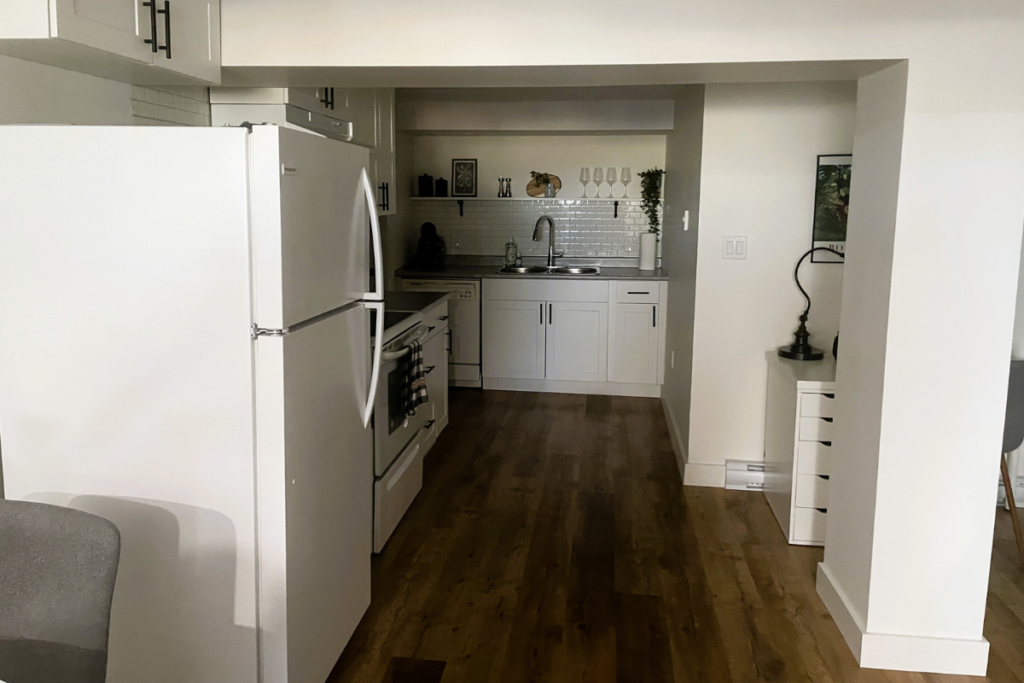
For many families, this is the best autism-friendly accommodation option. Having an entire house or apartment gives you more control over the environment than a traditional hotel can.
Best for:
Kids who are sensitive to noise, crowds, or constant activity, and need a quiet, home-like setting to settle into.
Pros:
- Full kitchen
- Separate bedrooms and living areas
- Often located in quieter, residential areas
- No shared walls or hallway noise (if you book a detached home)
- May even have a backyard or outdoor space
- Feels more like home
Cons:
- Harder to prepare for (less likely to have video tours or a lot of pictures)
- No on-site amenities like pools or restaurants (in most cases)
Our Experience:
We’ve rented full houses on Airbnb and VRBO for several trips. Our first experience was a trip to Orlando with my whole family (19 of us altogether). Brie still talks about “the big house,” and some of our favorite memories from that trip were the time we spent together in the backyard pool.
On our East Coast Canada road trip last summer, we did one Airbnb stay. After two weeks of mostly hotel rooms, it was great to have a full house. Brie was thrilled to find a TV with Netflix so she could watch her favorite shows. Zen and I were happy that she had a separate bedroom to sleep in, so we were able to watch a show together once she went to bed at 9:00 pm.
University Residences
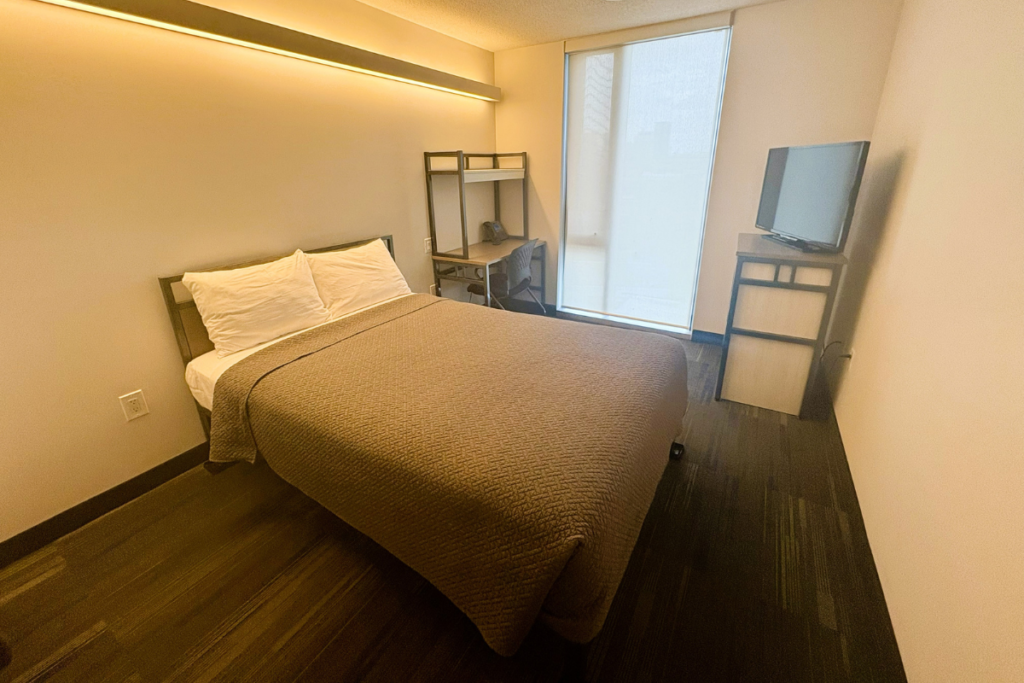
This is an option most families don’t even know about. In the summer, many schools rent out dorms, and some of them offer apartment-style suites with multiple bedrooms that are perfect for families.
Best for:
Families who want extra space and simplicity at a lower price.
Pros:
- Budget pricing (often cheaper than an Airbnb of the same size)
- Generally quiet, especially on smaller campuses
- Simple and uncluttered (often just basic furniture with no décor)
Cons:
- Limited availability for apartment-style suites (summer only), and they tend to book up fast
- Very basic (no extras or “comfort” features)
- Limited amenities (you likely won’t find a pool)
Our Experience:
Last spring, I stayed in a 2-bedroom suite at George Brown College in Toronto with a friend. I was impressed by the space we got at a price far lower than most hotels in the area.
When I found a 4-bedroom at Mount Saint Vincent University in Halifax, I knew it would be the perfect place to stay on our East Coast Canada road trip. Brie loved having her own space. So much so that she chose to stay with Grandma for a full break day after we explored Halifax, instead of coming with me on a road trip to Peggy’s Cove.
A dorm stay isn’t somewhere I’d choose for a luxury trip, but when we just need a quiet, simple place with some private space for everyone, they’re the perfect option.
Extended Stay Hotels (Apartment-Style)
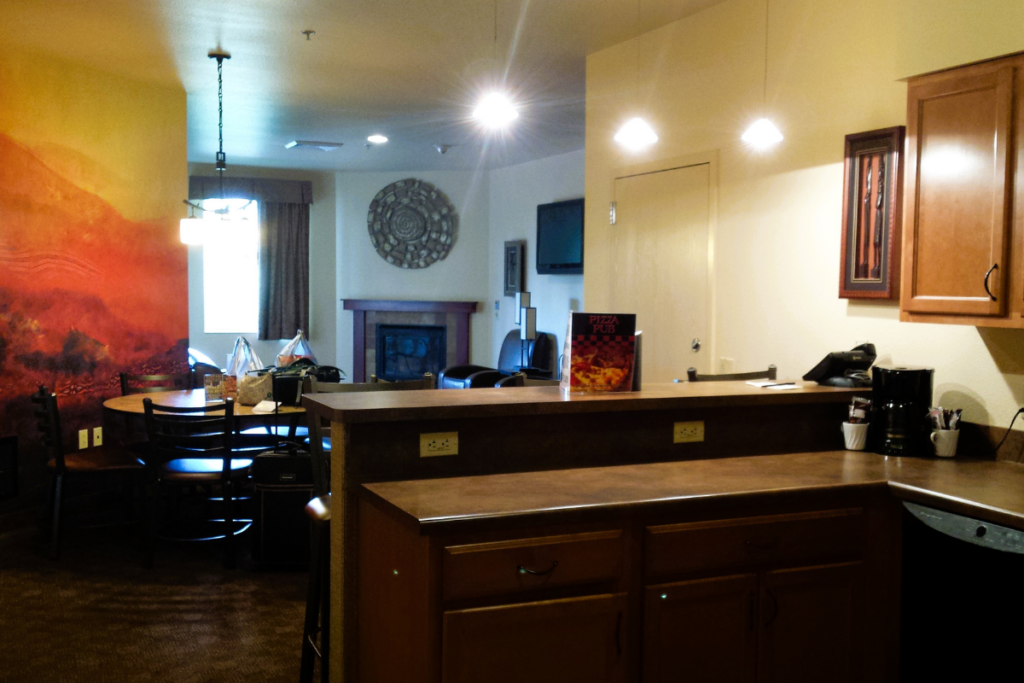
Hotels like the Residence Inn or Staybridge Suites are designed for longer stays, so they offer more room and full kitchens.
Best for:
Families who want extra space and the ability to make their own food, but still want the convenience and amenities of a hotel.
Pros:
- Separate bedroom and living space
- Full kitchen
- Usually quieter than standard hotels
- May have a pool
Cons:
- Still a hotel, so hallway noise is possible
- Busy lobbies and breakfast areas
Our Experience:
We haven’t stayed at any extended stay hotels specifically, but we have upgraded to a one- or two-bedroom suite at standard hotels to get a full kitchen.
On our East Coast Canada road trip, we got a one-bedroom suite at the Thriftlodge in Moncton. While the hotel itself was a bit sketchy (calling it 2 stars is generous), the room layout was perfect. Like the Airbnb, Brie had a separate bedroom where she could watch cartoons and go to bed early, while Zen, Grandma, and I could hang out in the living area.
Camping/Glamping
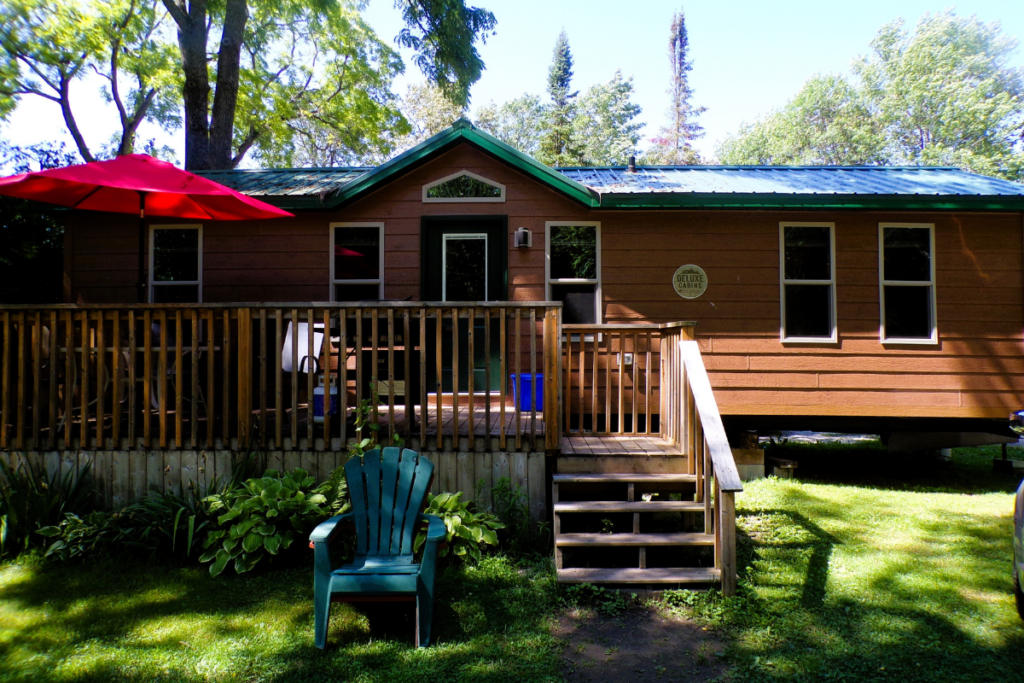
Traditional camping in a tent would be difficult for many of our kids, but lots of campsites offer deluxe cabins, or even RV rentals,with full kitchens, a private bathroom, and electricity to keep that iPad charged.
Best for:
Families who want to enjoy the atmosphere and amenities of a campground, but need the conveniences of a home-like base.
Pros:
- Typically away from tourist areas, so quieter than hotels
- Private bedroom
- Full kitchen
- No shared walls or hallway noise
Cons:
- The weather can impact everything
- Shared campground spaces can still be noisy or busy
Our Experience:
We haven’t done a lot of camping, but the few times we’ve rented a cabin, Brie has loved it. Our first trip was in a “Rustic Plus” cabin, which is not exactly deluxe, but at least a step up from rustic. It was all one room with two sets of bunk beds, a counter, and a small table and chairs. But it did have a mini fridge and electricity, so it worked for a short stay.
On the last camping trip we went on, we splurged on the deluxe cabin, and it was perfect. There was a master bedroom on one side with a king-sized bed, a living room and a full kitchen in the middle, then a hallway that led to the bathroom and a small room with two sets of bunk beds. Brie loved the campfires at night and lake swims, but we still had the comfort of our own bathroom and a full kitchen.
Certified Autism-Friendly Resorts
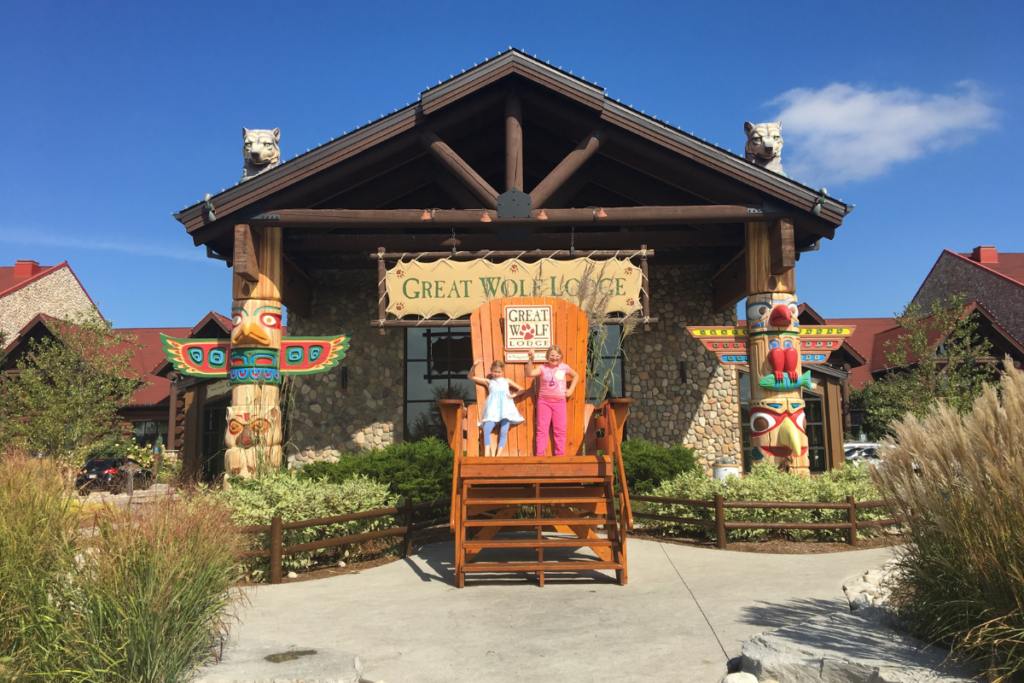
This one really depends on your child. Many autism-friendly resorts have gone the extra mile to be more inclusive, but they still may not be the best environment for every kid with autism.
Best for:
Families who want the convenience of on-site activities without the hassle of a lot of planning.
Pros:
- Everything in one place (food, activities, entertainment)
- Lots to do without leaving the property
- Kid-focused amenities and activities (pools, splash pads, game rooms, dance parties, story time)
Cons:
- Loud, busy, and often overstimulating
- Higher price point
- Less control over your environment compared to a private rental
Our Experience:
We haven’t done any all-inclusive resorts yet, but we regularly go to Great Wolf Lodge in Niagara Falls and have done Kalahari in Sandusky a few times. While they are very stimulating environments for Brie, she does okay for a one- or two-night stay. Being able to take breaks from the waterpark in our room helps. We try to step away at meal times and take our food up to the room, so it’s easier for her to last the full day.
Staying in Standard Hotels with an Autistic Child
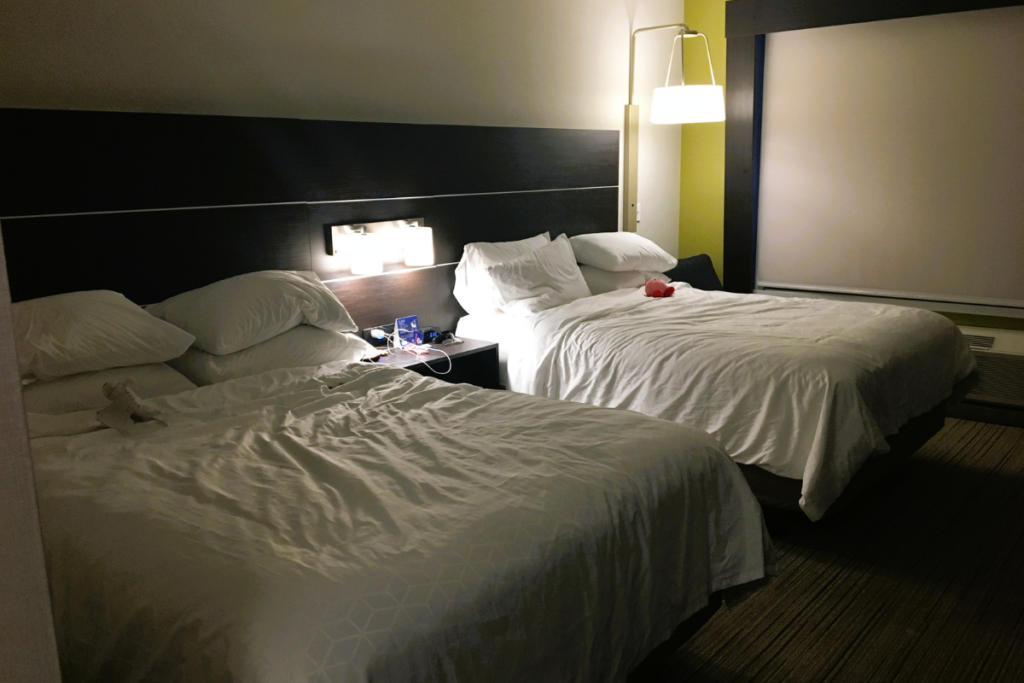
While many children with autism may need somewhere with more space or a quieter environment, some kids can do fine in a standard hotel room if you know what to look for. And sometimes, it’s the only option based on location or budget. If you go this route, here are some things to look for when searching for an autism-friendly hotel or resort.
Is the hotel/resort certified/trained in autism?
Many popular hotel chains and resorts are becoming autism certified so they can provide a better experience for families traveling with autistic children. So far, there are two autism certifications in the hotel and resort industry:
These certifications usually mean that some staff have been trained on what autism is and how to provide appropriate accommodations for autistic guests. Some places also have sensory guides, social stories, or other resources available.
How loud and busy is the hotel/resort?
A big factor to consider when looking for an autism-friendly hotel or resort is how busy and loud it will actually be. Is it in an area that gets a lot of foot traffic? Being on the main strip is convenient, but the noise from everyone walking by when your child is trying to sleep won’t be.
Some hotels use their lobby as a social center, which makes them much busier, too. Brie loves Great Wolf Lodge, but she has been overwhelmed in the lobby there many times. It’s busy, they host special activities like story time and dance parties, and there are animatronics that make noise she absolutely cannot stand.
How visually stimulating is the hotel/accommodation?
Another factor to consider is the visual stimulation. While over-the-top theming at hotels like Disney World’s Art of Animation is fun for many kids, all that bright, busy decor can be too much for an autistic child.
We stayed at All-Star Movies on our last Disney World trip, and Brie actually did okay. While we were in a very stimulating section (Toy Story), the room itself was calm, so she had no issues relaxing after a busy day at the Parks.
How far is it from the main attractions?
Location-wise, you need to find the sweet spot. You don’t want to be too close to all the excitement since it will be louder and more overwhelming. But you also don’t want to stay too far and deal with a long walk or drive with an excited child every day. Think about how long your child can wait once they know where you’re going. Choose a location that’s far enough from the busyness, but not so far that it will cause a daily struggle.
Brie has gotten a lot better at waiting to get to attractions, but when she was younger, it was a real challenge. As soon as she knew we were going somewhere, she was ready to go right now, so a half-hour drive wasn’t something she could handle. Walking has always been fine, though (as long as I can keep up with her, because when she’s on a mission, she’s fast).
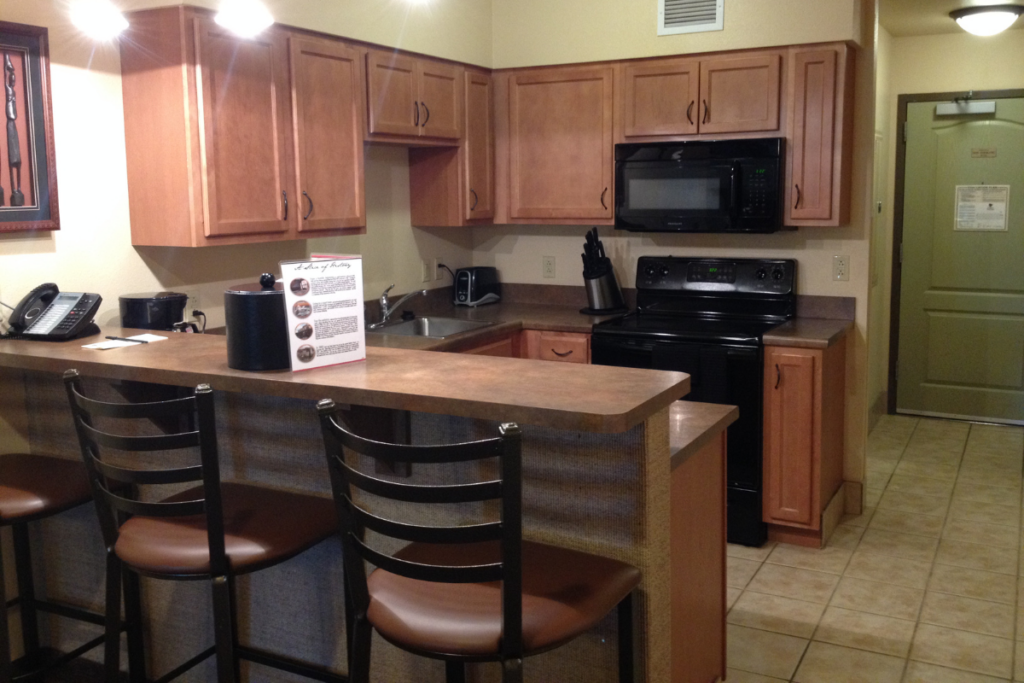
Is there a kitchen (or at least a minifridge), or an on-site restaurant with your child’s safe food?
For some families, food is the hardest part about traveling with a child with autism, whether it’s due to allergies, food intolerances, or food aversions. If your child’s diet is very limited, you may need a hotel room with a full kitchen. If there’s a bit more flexibility, you may be fine with just a mini fridge, a microwave, and a few restaurants nearby that have something your child will actually eat.
When Brie was younger, she had a lot of food intolerances, which meant I pretty much had to bring all her food with us on vacation. Stays with full kitchens were always easier. But when that wasn’t an option, I made it work by bringing her premade meals in our plug-in cooler.
Will your child need their own space?
If your child won’t be able to decompress or sleep in a shared space, your options for autism-friendly hotels are a bit more limited. You’ll need to find one that offers suites with a separate bedroom, or look at hotel alternatives with a more home-like layout.
Brie is fine sharing a room when we travel, but she does need total darkness and quiet at bedtime, which is usually 9:00 pm. That can make things tricky for Zen and me, since we obviously stay up later. Having a separate room for Brie to sleep is ideal. But we’ve learned to adapt in a traditional hotel room, too. Zen and I can get away with being on our phones, as long as they’re silent, and Brie wears her sleep mask to block out any light.
What amenities does the hotel offer?
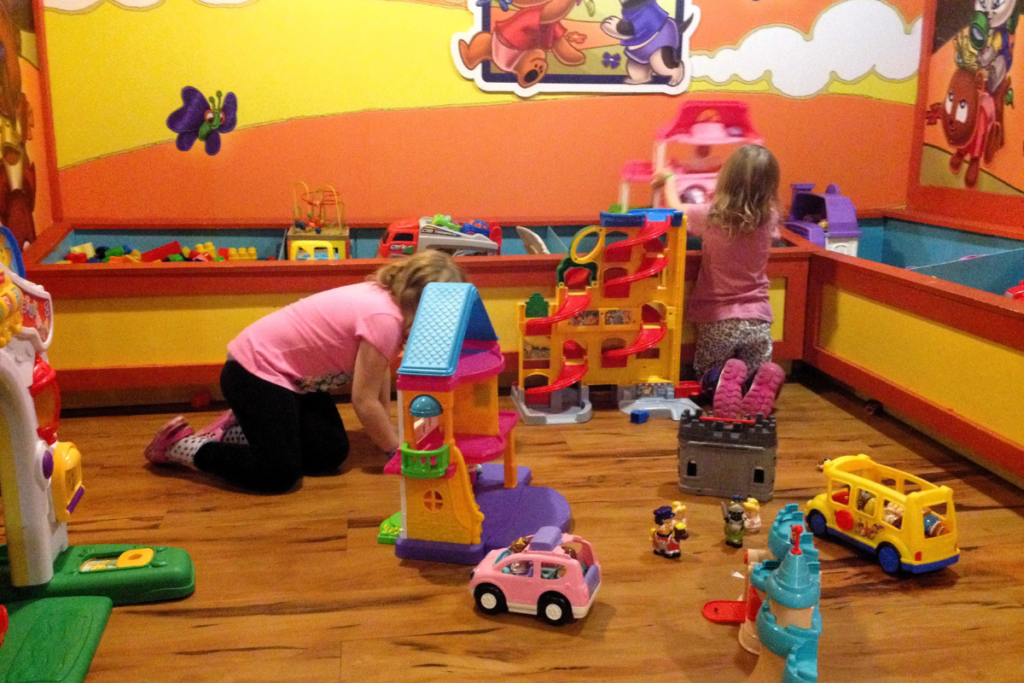
Children with autism often need more breaks or shorter days to avoid becoming overstimulated. Because of that, you’ll likely spend more time at the hotel than most travelers. When you’re stuck in a traditional, small hotel room, finding a place with child-friendly amenities is a must. Beyond just a pool, look for hotels that have playgrounds, game rooms, or even a large courtyard area where you can hang out.
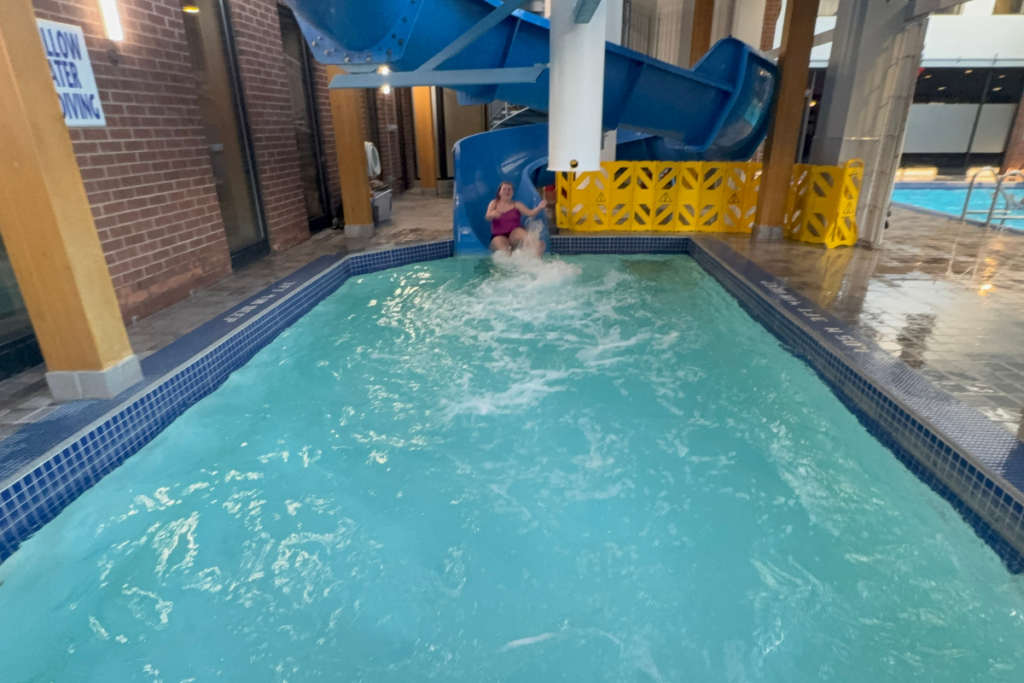
I usually book a place with a pool for Brie because I know it’s the best way to help her unwind after a busy day. Even better, I sometimes luck out and find somewhere with a waterslide for her, too. While a playground or a toy room isn’t a deal-breaker for us, it’s always a nice bonus.
Tips for Booking an Autism Friendly Hotel
If a regular hotel is your only option, these tips can help make your trip less stressful:
- Make Special Requests: When you book, request a room away from high-traffic areas like lobbies, vending machines, and elevators. A room at the end of the hall is usually quieter and less prone to foot traffic.
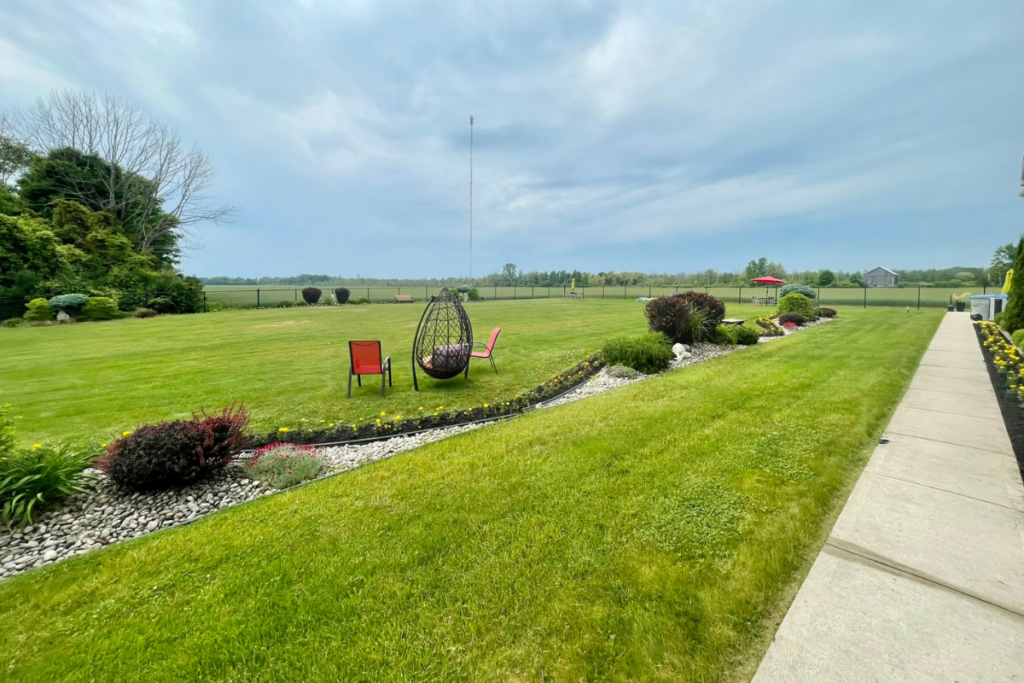
- Check the amenities: For active kids, a playground, outdoor space, or courtyard can make a big difference for built-in movement breaks.
- Help Your Child Prepare: Have your child look at pictures or video tours (if available) of the hotel so they know exactly what to expect before you arrive
- Bring the Comfort Items: Pack whatever your child needs to feel at home. Even if it feels like a lot to bring, having their favorite blanket or other favorite items can make an unfamiliar space feel “safe”.
- Bring a Tent: If you need to create a quiet, separate space for your child to decompress or sleep, a pop-up bed tent or small play tent can really help.
- Bring a Travel Sensory Kit: I always keep a bag pre-packed with things to help prevent Brie from getting overwhelmed. Check out my post here on what I keep in our kit.
- Bring a Door Alarm: If your child is a flight risk, or there is a chance they could wander out of the room, portable alarms are easy to use on a hotel room door so you know if they try to leave.
- Check the Noise Levels: Read reviews, paying attention to anyone mentioning disruptive noises. Look for comments about thin walls, loud hallways, or busy areas. Other guests will usually mention it.
- Stick to Your Routine (as much as possible): Keep bedtime, meals, and downtime as close to normal as you can.
- Plan for Downtime: Don’t schedule your entire day. Build in time to come back to the room and reset.
- Call the Hotel Ahead of Time: If you have specific needs, it can be worth speaking to the front desk directly to see what they can accommodate.
For more tips on traveling with a child with autism, check out my full guide.
Final Thoughts: Choosing What Works for Your Child
Traveling with autism is about managing expectations. Sometimes that 5-star hotel everyone recommends just won’t work for us. We need to pick the place that gives us the best chance of keeping our children happy and regulated.
That may mean renting a full house in a quiet neighborhood instead of staying at a fancy hotel right beside all the attractions. We’ve stayed in a variety of accommodation types, and while Brie does okay in a standard hotel, somewhere with a full kitchen and separate bedrooms is always better for us.
What’s been your biggest challenge with finding autism-friendly hotels? Let us know in our new Autism on Vacation Facebook group. And make sure to follow us on TikTok or Facebook for more travel tips, sensory-friendly reviews of attractions and hotels, and inspiration for your next trip.
More Autism Travel Planning Resources
Autism-Friendly Hotels
- Is the Hotel Ambassadeur Autism Friendly?
- Is the Château Cartier Hotel Autism Friendly?
- Best Autism-Friendly Places to Stay Near Disney
- The Best Disney Resorts for Autism
Travel Tips
- Autism Travel Tips: A Parent’s Guide for Traveling with Autism
- Tips for Traveling with Autism: Road Trips
- Finding Autism Friendly Hotels
- Travel Sensory Kit for Autism
Ontario Destinations
- Niagara Falls Travel Guides and Reviews
- Ottawa Travel Guides and Reviews
- Toronto Travel Guides and Reviews
- London Travel Guides and Reviews