

A travel sensory kit for autism is essential for children, teens, and adults who struggle with sensory sensitivities or overwhelm in public places. If your child has ever had a meltdown in public, you already know how important it is to manage sensory overload when you’re traveling or just trying to enjoy a day out.
When Brie was younger, I didn’t have a set sensory kit for her, but I had a diaper bag until she was at least five. After that, her autism sensory kit was just a mix of random items I kept in my oversized purse, including a few snacks in case she needed them. At home, we’ve always kept at least one sensory box filled with fidgets and chewelry.
Nowadays, having a set kit is much more common. Many children even have their own sensory bag or box at school. The tourism industry has also caught on, with many places now offering sensory kits or sensory bags for children with autism and other sensory needs to borrow if families forget to pack their own.
For example:
- Winnipeg Richardson International Airport has sensory support kits with items like a fidget spinner, squeeze balls, and stuffed toys.
- London Children’s Museum (follow me on Facebook to see my upcoming review) offers sensory backpacks with noise-reducing headphones, a visual timer, and a fidget toy.
- The Rogers Centre in Toronto has sensory kits through KultureCity that include noise-reducing headphones, a feelings thermometer, and fidgets.
A sensory needs kit doesn’t have to be elaborate. A small bag with a few items can make a huge difference, helping your child with self-regulation and easing sensory challenges. Creating your own sensory kit for travel is simple—you just need to personalize it to your child’s needs.
If you’re looking for tips on how to travel with an autistic child, take a look at my autism travel tips post. For some destination specific guides, check out the Ontario autism friendly events, attractions and hotels, we’ve rated so far, or our guides for Disney World.
In this post, I’ll share how to make an autism sensory bag for travel, with ideas on what to include, and what Brie has in hers.
Who Benefits from a Sensory Kit?
- Individuals with autism or sensory processing disorder: A sensory travel kit provides focused sensory input that helps manage overwhelm in overstimulating environments.
- Individuals with ADHD: Items like fidgets and stress balls give an outlet for excess energy and help with the constant need to move.
- Individuals with anxiety: Playing with a small, tactile item can distract from anxious thoughts while also burning off some of the extra energy caused by anxiety.
- Children in general: Most kids get restless during long waits—whether that’s at a doctor’s office, waiting for food at a restaurant, or standing in line for an attraction like Space Mountain. A small autism sensory kit or bag with fun toys makes those wait times much easier.
Where Will You Need Your Autism Sensory Kit
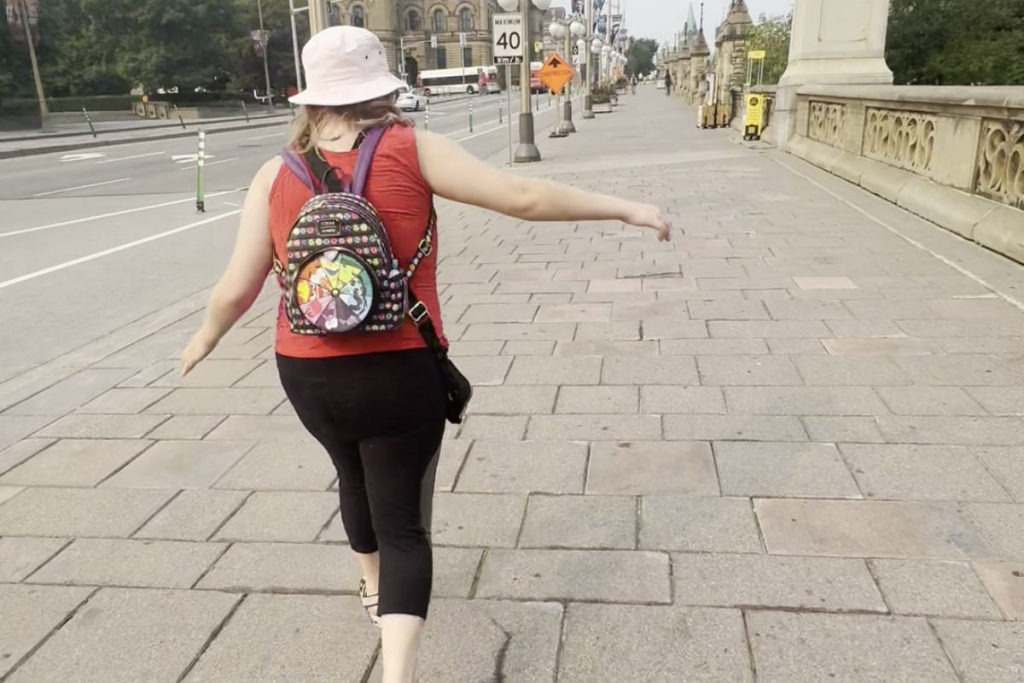
There are many situations where an autism sensory kit is needed. Sometimes you only need a small bag with just a few essentials that you can fit in your purse or tuck into a younger child’s diaper bag. Other times, you’ll want the full sensory kit for travel, stocked with everything your child might need.
A small sensory kit works well for:
- Shopping trips
- Doctor’s appointments
- Restaurants
A full sensory travel kit is best for:
- Flights or long train and bus rides
- Road Trips
- Visiting friends or family
- Hotel stays
- Sporting events
- Amusement parks — If you’re planning a theme park visit, our guide to Disney with autism is full of safety tips and strategies.
It’s also helpful to keep a larger sensory box or bag in your car. That way, you’ll always have extra toys and tools ready for longer drives or for times when you forget to pack the smaller kit.
Choosing The Best Bag for Your Sensory Kit
The type of bag you use for your sensory kit depends on how much you need to pack and whether you have any larger items to include. Backpacks with multiple pockets are especially convenient, since you can keep the items you’ll need to grab quickly in a separate section.
Here are some of my top recommendations for storing the items in a larger autism sensory kit:
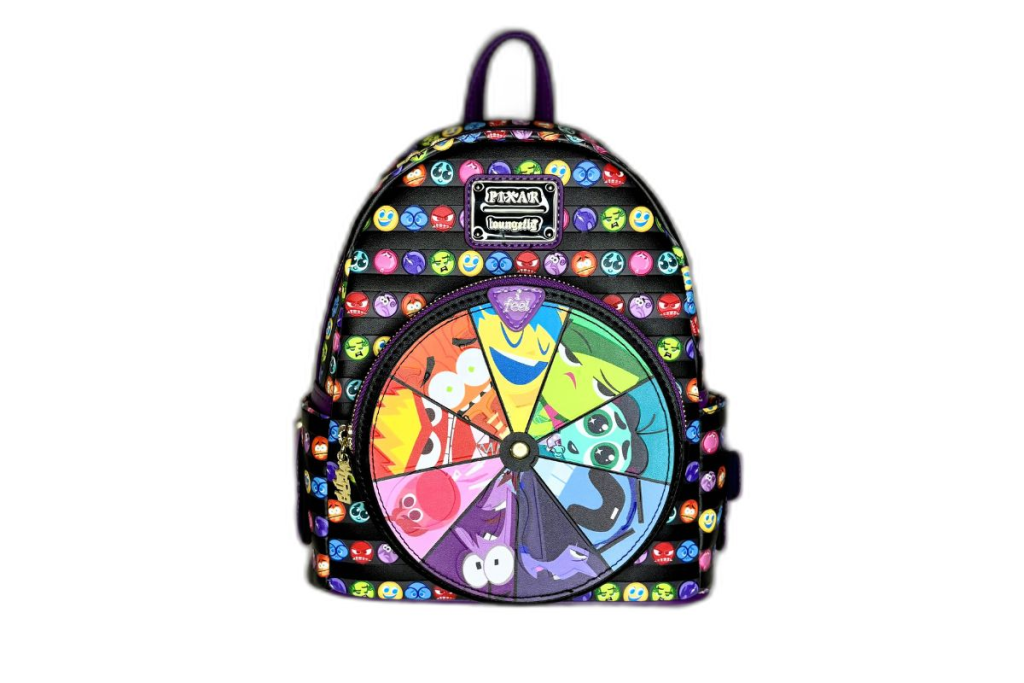
- Inside Out 2 Loungefly: My top recommendation (and the one Brie has) because of the feelings wheel on the front. Whether your child is nonverbal or simply struggles to communicate when overwhelmed, the wheel can help them show how they’re feeling on the go.
- Other Loungefly bags: These backpacks are a great size for younger kids to carry themselves, and with so many designs, it’s easy to find one featuring your child’s favorite character or movie.
- Backpack with charger: Perfect if you carry an AAC device or iPad/tablet. Built-in chargers make it easier to keep devices ready to use.
- Small diaper bag: With lots of pockets and compartments, diaper bags are a great option for a portable sensory kit.
- Extra-large toy storage bags with zippers: These clear bags make it easy to find items quickly in stressful situations.
- Kidicabs backpack: This backpack doubles as a busy board, so the bag itself becomes a fidget. It still has plenty of room inside for other essentials, making it a great choice for younger kids.
- Plush toddler backpack: These soft, themed backpacks in animal designs are another good option for little ones.
- Simple drawstring backpack: These can work as a budget-friendly option, but in our experience, they aren’t comfortable to wear for long periods. We used one for our Disney Park bag, and while it was convenient to pack, it was lumpy on the back.
Smaller sensory travel kits can also fit into:
- Ultimate Activity Backpack (clear, small-sized, comes with some art activities; available in Bluey or Unicorn themes)
- Pencil case or box (this Pop It Pencil Case is perfect)
- Makeup bag
- Ziploc bag
- Packing cubes
- Fanny pack
- Crossbody or belt bag
We found that Loungefly bags are the perfect size for Brie’s travel sensory kit. On our Walt Disney World trip, we used a knockoff Loungefly as her park bag, but she later upgraded to the Inside Out 2 Loungefly for her birthday before our East Coast trip. She especially loves the emotion wheel on the front, which gives her a simple way to show me how she’s feeling if she becomes too overwhelmed to talk.
What To Put in Your Autism Sensory Kit
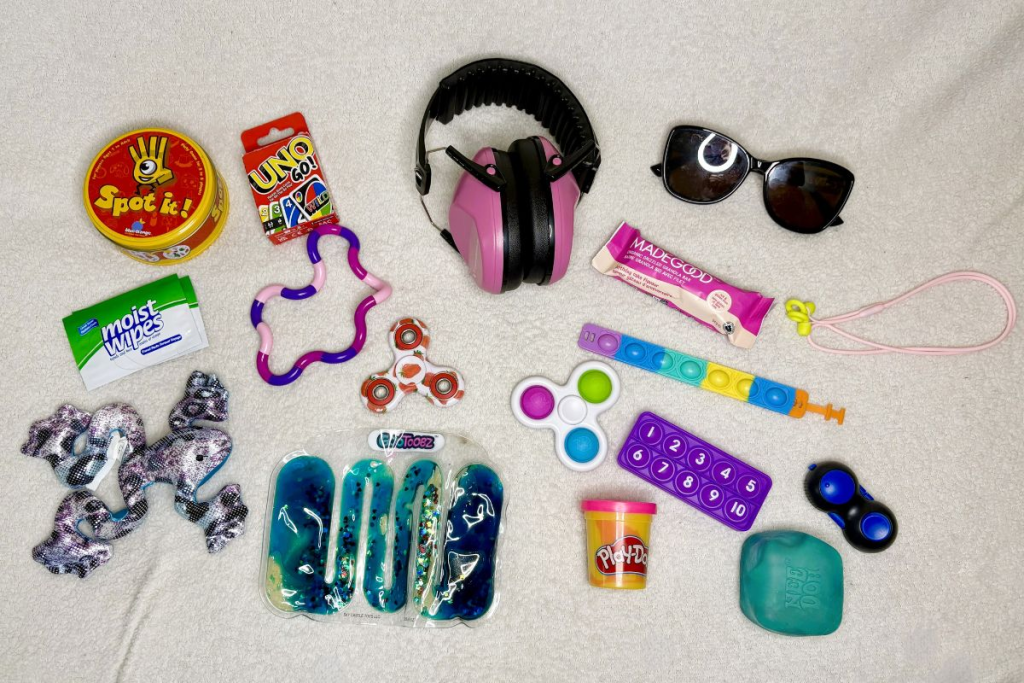
Every travel sensory kit will look a little different, since everyone has unique needs and interests. Some kids (or adults) may need more fidgets, while others rely on sensory prevention items. Your kit will also change over time with your child’s needs. Use this list of sensory kit ideas to get started and customize it for your family.
Sensory Protection and Prevention Items
If your child is sensitive to noise, headphones or earplugs may be the single most important thing in your autism sensory kit. When Brie was younger, I always kept a spare pair in the car so we’d never forget them. As she got older, she started grabbing them herself before we went anywhere that she expected to be loud.
Fidgets and Stress Toys
Since the fidget spinner came out, the variety of sensory toys for autism has expanded a lot. We have so many that nearly every room in our house has a full sensory box. I rotate the ones in Brie’s bag so she doesn’t get bored with the same toys.
- Stress balls
- NeeDoh Squeeze Cube (our favorite stress ball)
- Slow-rising stress cube
- Chewelry
- Pop-Its
- Fidget spinners
- Sensory activity ball
- Squishy maze toys
- Wacky Tracks links
- Wooden fidget cube
- Sensory sticks
- Controller fidget
- 12-sided fidget cube
- Textured slap bracelets
- Fidget keyboard keychain
- Stretch band
- Thinking putty
- Scented Happy Dough
Calming Items
No matter how much we try to prevent overwhelm, it sometimes still happens. Calming items can help your child relax and self-regulate. For Brie, distraction works best, so I always carry her iPad, phone, or even apps on my own phone.
- Weighted lap pad
- Weighted stuffed animal
- Aromatherapy inhalers
- Favorite scented lotions
Visual Supports
Even for verbal children, visual tools are helpful. Brie doesn’t need these much anymore, but when she was younger, we carried a small PECS binder everywhere.
- Visual Schedules
- Snack Choice Board
- Communication Keyring
- Emotion Chart
- Visual Timer
- Kids timer watch
Toys or Activities
Waiting is hard for kids, but having activities on hand helps them with patience. When Brie was little, she brought her Nintendo 3DS to restaurants. Now, she prefers her phone, but I still sometimes pack Spot It or a card game for us to play together.
- Small travel games (Spot It is our favorite)
- Rotating Puzzle
- Busy Boards
- Travel activity sets
- Sticker activity books
- Bubbles
Safety Items
While these aren’t technically sensory tools, they’re worth keeping in your sensory travel kit so you never forget them.
- AirTag, Tile, or Smart Tag (put them in a bracelet, necklace, shoe insoles or hidden AirTag pockets)
- Child safety harnesses, wrist leash, waist leash
- ID bracelets or tags
- Glow sticks or wearable lights
Other Helpful Items
Brie loves having snacks in her sensory bag. Since she’s strict with her routines, knowing she has her 2:00 p.m. granola bar ready helps her feel secure.
- Post-it notes (to cover sensors on automatic flushing toilets)
- Extra snacks
- Suckers
- A portable charger with their favorite device
Sensory Kit Ideas for Adults
An adult sensory kit often looks different than one for a child. While I don’t have a full sensory kit for myself, I’ve been known to bring a travel coloring set to staff meetings and trainings. I also keep scented playdough and Pop-Its in my purse. These adult sensory toys and tools can help with focus, grounding, or relaxation:
- Gum or mints
- Loop earplugs
- Noise-cancelling earbuds with your favorite playlist or audiobook on your phone
- Scented lip balm
- Guided journals
- Sleep mask
- Scent-Infused Grounding Stones
- Thumb Worry Stone Crystals
- Sensory Stone
- Figette Bike Chain
- Metal Fidget Slider
- ONO Roller
What’s in Brie’s Sensory Backpack?
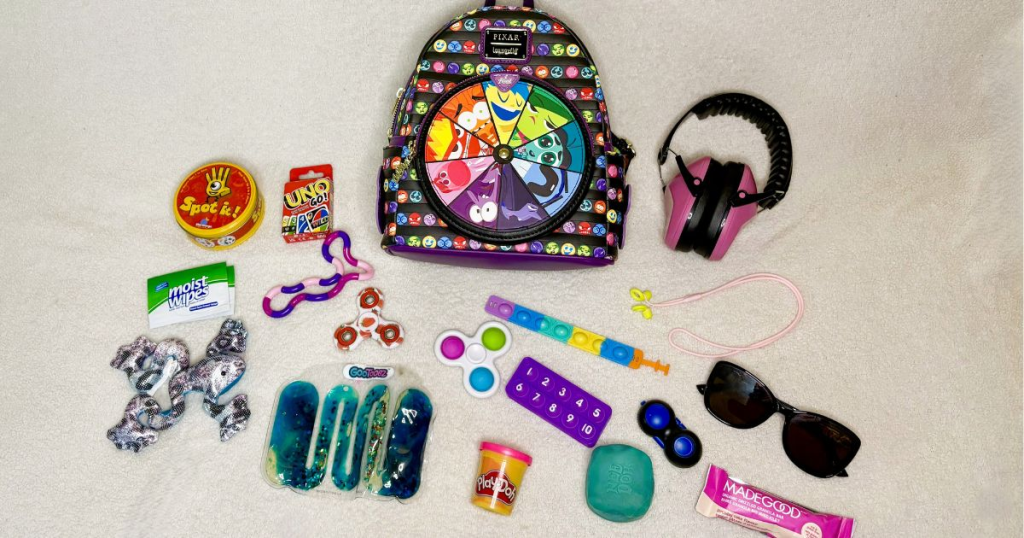
Brie’s travel sensory kit currently includes:
- Loop earplugs
- AirTag for safety
- Chewelry
- Wet wipes
- A variety of Pop-It toys
- NeeDoh squeeze cube
- Play-Doh
- Squishy sensory maze fidget
- Noise-cancelling headphones
- Sunglasses
- Spot It game
- Mini Uno deck
- Snacks in the front pocket so she can easily find them
With so many affordable sensory items available, building your own kit doesn’t have to be expensive. You can even get creative and make your own—Pinterest is full of DIY sensory activity ideas.
What’s in your child’s travel sensory kit? I’d love to see—come share a picture in our Autism on Vacation Facebook group, or let us know if there are any essentials that we’ve missed.
If you’re looking for more sensory-friendly activities or autism-friendly travel ideas, follow us on Facebook and TikTok so you don’t miss what Brie and I discover next or check out the autism friendly events, attractions and hotels we’ve rated so far.
You may also like:
Find more travel Inspiration: